Trouser Hems and Shoes: Compare the Whole Outline Before Changing Length
The same trousers can sit differently over trainers, loafers and boots. Start with the actual shoes and an ordinary walking check before deciding whether the hem needs changing. These are editorial outfit experiments, not rules about how a body should look.
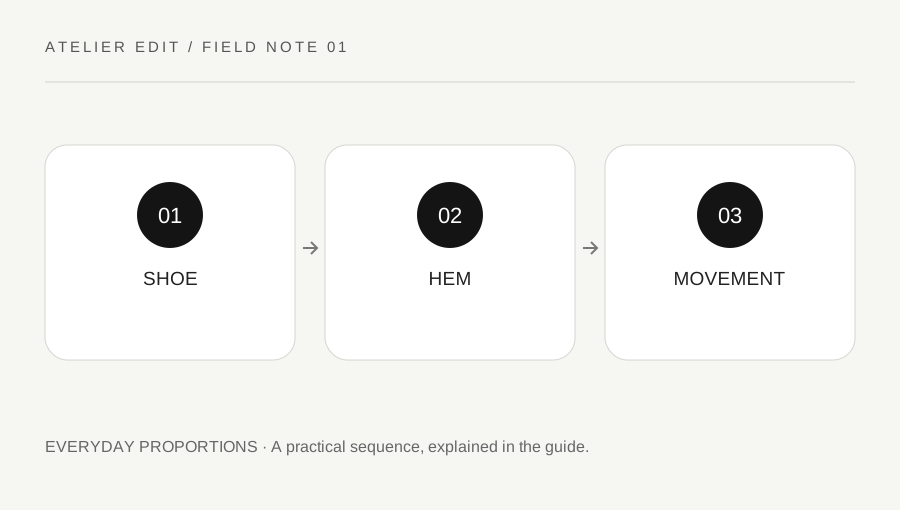
Original explanatory diagram. Examples illustrate a method or decision; they are not claims of personal testing.
Begin with the shoes you will wear
Put on the intended shoes and fasten the trousers as you normally would. A thick sole, a narrow toe and a boot shaft each change the point where fabric meets footwear. Looking at a trouser hem barefoot can therefore answer the wrong question.
Check both legs in a full-length mirror and from the side if possible. Note whether the fabric hangs freely, rests lightly on the shoe or gathers into several folds. None is automatically a mistake. Decide which outline you prefer and whether it works for the day's movement and setting.
Separate preference from interference
A hem that drags on the ground or catches beneath a heel presents a practical problem. A hem that simply creates a softer fold may be a style preference. Keep those judgments separate. Walk, sit and use a normal step rather than making the decision from one still pose.
If the trousers are much too long, obtain a suitable alteration rather than relying on an unstable temporary fold. Do not cut before comparing the footwear you expect to use most. A permanent length that suits one high shoe may behave differently with a flat pair.
Try a reversible comparison
Where the garment permits it, use a neat temporary fold for a mirror comparison without damaging the fabric. Check the care and construction details before pressing anything. Avoid pins or improvised attachments that could scratch, fall out or interfere with movement during wear.
Compare only the hem change first. Keep the top and shoes the same so the difference is visible. If the new length makes the outfit feel clearer, record that observation. If it only looks different, decide whether the practical improvement justifies a permanent alteration.
Plan for more than one pair
Choose the main footwear category for the trousers and accept that one hem may not give exactly the same effect with every shoe. A cropped length, a soft break and a longer drape are different choices, not a universal hierarchy. Use your own comfort and the setting to decide.
For a worked outfit, compare straight dark trousers with low trainers and then loafers. Observe the shoe opening and fabric contact in each version. Keep a note of which combination works without dragging or constant adjustment. The useful result is a dependable outfit pairing, not a demand to replace every shoe or alter every garment.
Make a footwear comparison card
Use a small note with columns for shoe pair, standing hem, walking hem and seated comfort. Describe what the fabric actually does instead of assigning a vague score. A trouser leg may rest neatly while standing but catch beneath the heel during a normal step, which is a different observation from simply preferring a longer drape.
Choose the footwear used most often before discussing a permanent alteration. Bring that pair to an appropriate alteration appointment and explain any secondary shoe use. Do not request a length solely from a cropped photograph with an unknown heel height. If you use a reversible fold for comparison, remove it before ordinary wear unless it is securely and appropriately arranged for the garment. Keep the successful pairing in your outfit note. The record helps you avoid repeatedly buying similar trousers to solve a hem interaction that a clearer footwear decision or suitable alteration can address.
A practical checklist
Choices are saved in this browser. Reset them here or clear this site’s browser storage.
Questions that come up
Should trousers always cover the shoe?
No. Hem styles differ, and the useful choice depends on the garment, footwear, setting and your preference. Check movement and ground clearance rather than following a universal visual rule.
Can one hem work with every shoe height?
It may work acceptably with several, but the outline can change. Choose the main footwear use before making a permanent alteration.
Should I judge the hem barefoot?
Use the actual intended footwear. A barefoot check can miss the way the shoe supports or catches the fabric.
References & scope
Background references checked on 18 October 2026. Worked examples and diagrams are original teaching material.