Straight Jeans with Three Different Tops: Keep the Base and Change the Outline
Straight jeans can provide a familiar base for comparing a tee, a shirt and a knit. Keep the jeans and footwear fixed so you can see what each top changes. The result should be a set of usable combinations, not a universal uniform.
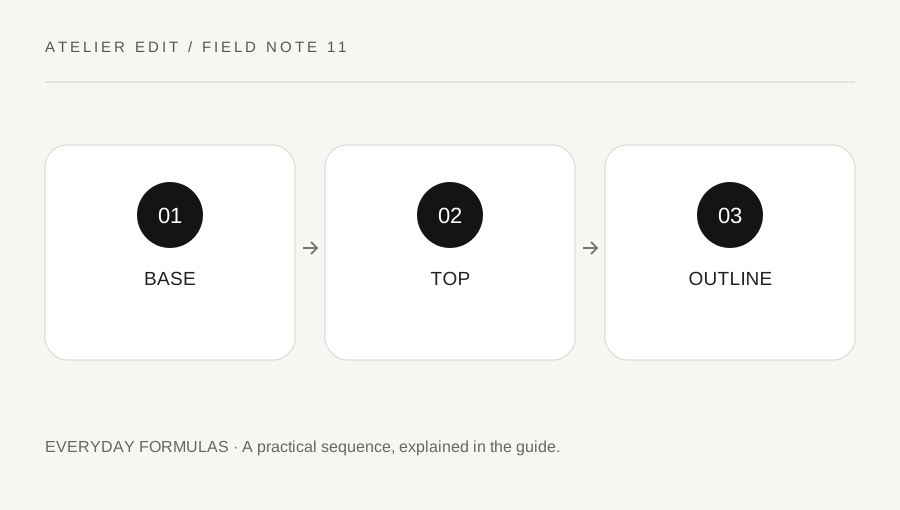
Original explanatory diagram. Examples illustrate a method or decision; they are not claims of personal testing.
Check the base before styling
Choose jeans with a comfortable waistband and a hem that works with the intended shoes. Straight-leg labels do not guarantee identical cuts, so use the actual pair rather than a category image. Walk and sit normally before focusing on the top.
Confirm that denim suits the day's setting. A darker wash or neat top does not automatically satisfy every dress requirement. Keep that practical decision separate from the visual experiment so you do not build an outfit around an unsuitable starting garment.
Compare a tee and a shirt
A plain tee can create a simple base with relatively few visible edges. A button-down adds a collar, fastening line and a different hem. Compare the two with the same shoes and belt treatment. Choose tucked or untucked versions deliberately.
Do not assume one is inherently more correct. The shirt can be worn open over a suitable base if that serves the weather and setting. Check that layers move comfortably and that the base outfit remains suitable if the outer shirt comes off.
Add a knit with attention to bulk
A knit can introduce texture and a different amount of volume at the waistband. Compare its hem without forcing a thick fabric into a tight tuck. A comfortable untucked version or a different knit length may be more useful.
Look at sleeves and neckline as well as the front hem. If you need outerwear, try the full combination before calling it complete. The jeans have stayed fixed, but the top's bulk can change whether a jacket feels comfortable.
Keep three usable notes
Record one tee formula, one shirt formula and one knit formula with the same jeans. For each, note the setting, tuck and outer-layer choice if relevant. Include comfort and ordinary movement, not only an appearance rating.
For an illustrative set, compare a cream tee, a blue shirt and a textured dark knit. These are suggestions using broad colour families, not a required shopping list. If one version does not work with your actual garments, keep the two that do. A small dependable set is more useful than forcing every category into a supposedly essential outfit formula.
Build a base-outfit comparison table
Write tee, shirt and knit as three rows, with columns for hem treatment, neckline, outer-layer fit and likely setting. Keep the same jeans and shoes in every row. If one top needs a different belt or underlayer for comfort, note that clearly rather than pretending the comparison changed only one feature.
Try each complete version in ordinary movement and keep a concise observation. A shirt may provide a collar you like, while a knit may add texture but crowd the planned jacket sleeve. Those are concrete differences you can use next time. Do not insist that all three rows become successful outfits. Two dependable versions are useful, and the third can remain a record of an unsuitable pairing. This approach helps you understand what the actual jeans can do with existing pieces. It also keeps the category label straight leg from becoming a promise that every top or shoe must work with that one garment.
A practical checklist
Choices are saved in this browser. Reset them here or clear this site’s browser storage.
Questions that come up
Are straight jeans a requirement for everyone?
No. They are the base used in this experiment. Adapt the method to another lower garment that suits you and your setting.
Should every top be tucked?
No. Compare the actual hem and fabric. A thick knit and a light shirt can need different treatments.
Why keep shoes unchanged?
It isolates the top’s effect. Once you understand that change, you can compare footwear as a separate step.
References & scope
Background references checked on 18 October 2026. Worked examples and diagrams are original teaching material.