A Plain White Tee: Three Ways to Change the Surrounding Structure
A familiar white tee can act as a quiet base while the surrounding garments change the outfit. Start with its actual fit and opacity, then compare an open shirt, a cardigan and a structured layer. The examples are adaptable ideas using existing clothes.
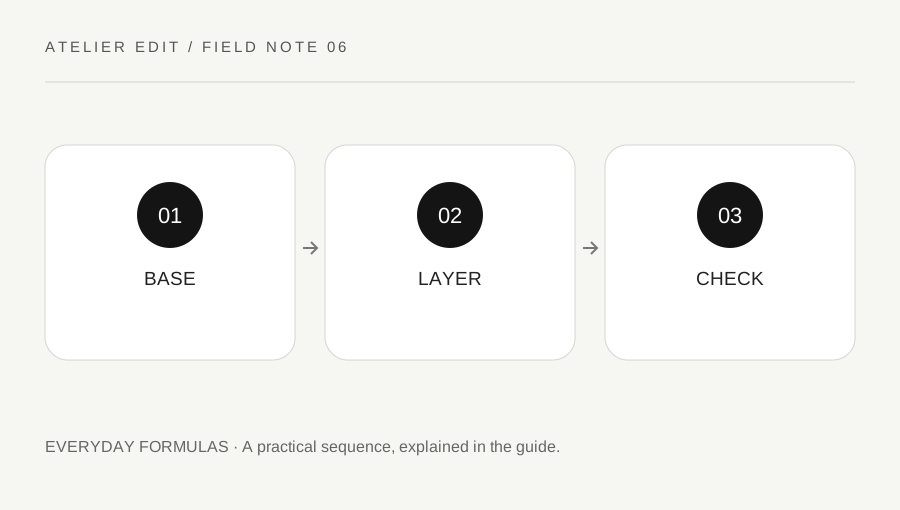
Original explanatory diagram. Examples illustrate a method or decision; they are not claims of personal testing.
Check the base garment first
Wear the tee in ordinary light and assess comfort, neckline, sleeve position and the coverage you want. White fabrics vary in thickness and opacity. Choose any underlayer according to your own preference and setting rather than assuming one universal solution.
Look at the hem with the intended trousers or skirt. A long tee, a short tee and a boxier tee create different layer boundaries. Decide whether it will be tucked or untucked before comparing outer pieces. Keep the garment comfortable when seated and moving.
Compare an open shirt and cardigan
An open shirt can frame the tee with two vertical edges and a visible collar. A cardigan can offer a softer outline, with its own hem and fastening choices. Compare each over the same lower garment so the change is easy to see.
Check sleeve room and whether the tee catches beneath the outer layer. Roll or fold only where the garment construction permits a stable comfortable result. Do not force several bulky cuffs into a tight sleeve. The useful option is one that remains manageable during the day, not just during a mirror pose.
Try a structured layer with restraint
A familiar jacket can introduce a clearer shoulder and front edge. Check that the tee neckline sits as you prefer within it. The combination's suitability for a workplace or event still depends on the actual dress expectations; adding a jacket does not automatically make every tee outfit appropriate.
Keep shoes and accessories quiet for the first comparison. Then add one detail only if it helps, such as a belt or a repeated colour. A plain base does not need every accessory at once. Observe which layer creates the outline you actually want.
Build a useful three-version note
Record the tee with an open shirt, cardigan and jacket using the same trousers and shoes. Note comfort and practical use as well as appearance. One version may work for a casual errand and another for a social visit, without either being a universal upgrade.
If none feels right, return to the tee's fit, hem or neckline rather than buying more layers immediately. These are original editorial outfit formulas, not a claim that a white tee is essential for everyone. A dependable base is simply one that works for your clothing preferences and the activities you actually do.
Write three complete formulas
Use one line for each layer: tee plus open shirt, tee plus cardigan and tee plus jacket. Add the actual lower garment and footwear to every line so the formula describes a complete outfit. Note whether the tee is tucked and how its neckline appears within the outer frame.
Test the base without the layer and check the coverage you want in ordinary light. Then add the layer and assess sleeves and hems. If a shirt is worn open, consider whether its edges remain manageable with the bag you normally carry. If a jacket closes, check that the tee does not bunch uncomfortably beneath it. Keep only versions you would genuinely use. A formula that requires constant adjustment is not made better by its simplicity on paper. This small record lets one familiar garment support several settings while preserving the option that another plain top may be a more useful base for your wardrobe.
A practical checklist
Choices are saved in this browser. Reset them here or clear this site’s browser storage.
Questions that come up
Does every wardrobe need a white tee?
No. It is one possible base. Use a different familiar plain top if it suits your preferences, coverage or care needs better.
Does a jacket make the tee acceptable everywhere?
No. Follow the actual dress expectations. A styling layer does not override a workplace or event requirement.
Why compare three layers with one base?
It reveals how structure changes the outfit without replacing every piece. Keep notes about comfort and real use as well as appearance.
References & scope
Background references checked on 18 October 2026. Worked examples and diagrams are original teaching material.