Use a Belt as a Deliberate Outfit Detail, Then Check Whether It Helps
A belt can secure a garment, add a visible line or repeat an accessory colour. Those are different jobs. Start by deciding which job you need, then compare the outfit with and without the belt before adding more details.
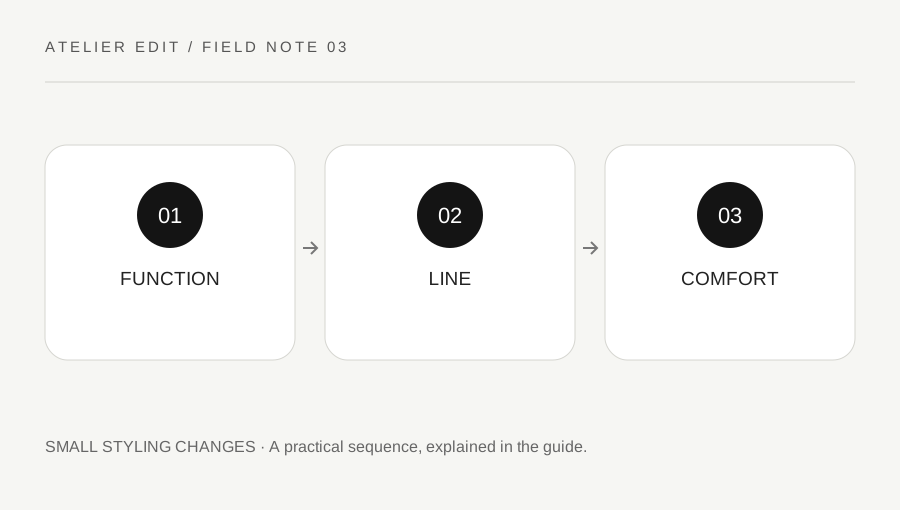
Original explanatory diagram. Examples illustrate a method or decision; they are not claims of personal testing.
Identify the practical role
If trousers need a belt to remain securely in place, choose a comfortable functional fit first. Check the loops, fastening and movement. A belt is not a solution for every badly fitting garment; an alteration or a different size can be more appropriate when the waistband bunches excessively.
If the belt is purely decorative, treat it as an optional design choice. It can create a clear division or introduce hardware shine. Neither effect is automatically necessary. Start with the outfit as worn without it so you can see what the added line actually changes.
Compare width and contrast
A narrow belt and a wide belt occupy different amounts of visual space. A similar colour can blend into the garment, while a contrasting colour makes the line more noticeable. Use pieces you already have and compare one variable at a time rather than assuming a particular width suits everyone.
Look at the buckle alongside buttons, jewelry and bag hardware. Exact matching is not compulsory; the question is whether the combination feels intentional to you. If the outfit already has several strong details, a quiet belt or no decorative belt may be easier to read.
Check the outfit in motion
Sit, bend comfortably and walk before deciding. The belt should not dig in, catch fabric or force an unsuitable garment into shape. If worn over a layer, check whether that layer bunches or slips. Do not fasten it uncomfortably tightly to preserve a photograph's arrangement.
Consider practical access to pockets and fastenings. A decorative detail that requires constant rearrangement may not suit a busy day. Keep the outfit's actual purpose visible: a short social visit and a full day of sitting can lead to different choices.
Try an existing-wardrobe example
Pair straight trousers with a plain top and compare three versions: no decorative belt, a low-contrast belt and a contrasting belt. Keep the tuck and shoes unchanged. Notice whether the added line clarifies the outfit or merely adds another point of attention.
Choose one version and note why it worked. If the belt repeats a shoe or bag colour, describe that as a preference rather than a mandatory matching rule. The goal is a useful small experiment with current clothes. It does not require buying a complete accessory set or making claims that a belt changes anyone's body into an ideal shape.
Compare the belt’s actual job
Create three short descriptions: securing the garment, adding a visible line and repeating another colour. Mark which applies to your chosen belt. If only the first is needed, a quiet functional option may be sufficient. If the belt is decorative, compare the outfit without it and decide whether its line or buckle adds something you want.
For a concrete trial, keep a shirt tuck fixed and compare a low-contrast belt with a more contrasting one. Look at the whole outfit, not only the waist close-up. Then sit and check the fastening and fabric beneath it. If the garment bunches substantially, reconsider its fit rather than fastening harder. Save the useful combination with the belt's actual width and buckle description. This makes later comparison more accurate than remembering that a brown belt worked, since another brown belt can have a very different scale and surface.
A practical checklist
Choices are saved in this browser. Reset them here or clear this site’s browser storage.
Questions that come up
Must the belt match the shoes exactly?
No. Repetition can be a useful choice, but exact matching is not compulsory. Compare the whole outfit and choose the relationship you prefer.
Can a belt fix a poor garment fit?
It can secure some suitable waistbands, but excessive bunching or discomfort may need an alteration or another fit. Do not rely on tight fastening to force the garment.
Should every tucked outfit have a belt?
No. A visible waistband can work without a decorative belt. Compare both versions with the actual garment and setting.
References & scope
Background references checked on 18 October 2026. Worked examples and diagrams are original teaching material.